
The Monument to the Soldiers
of the First World War (1914-1918)
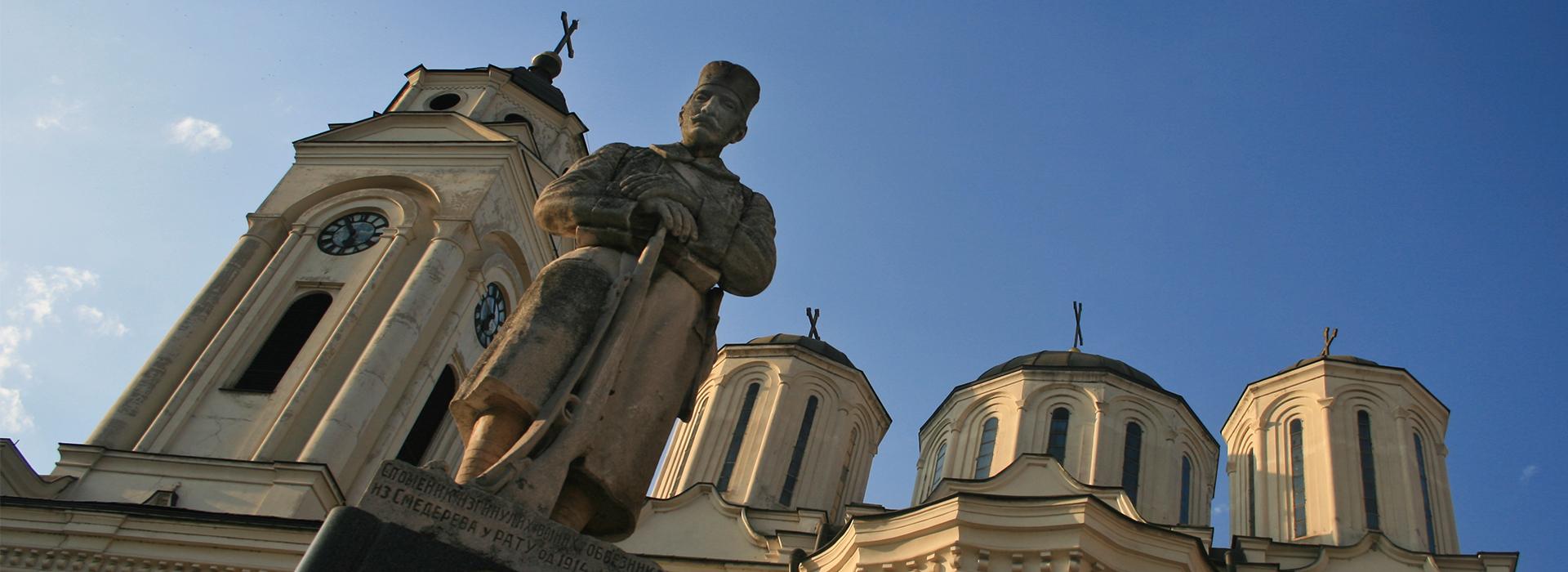
In the main City square, in the immediate vicinity of the Temple of Saint George, there is a Monument to the Soldiers of the First World War.
The monument was uncovered in 1926. The names of 286 fallen soldiers along with their military ranks or occupations were inscribed on the marble slabs. At the bottom of the Monument, there is a sculpture of a boy in a traditional garment kneeling and offering the triumphal wreath to a Serbian soldier who is resting on his rifle.
The 5th June Monument
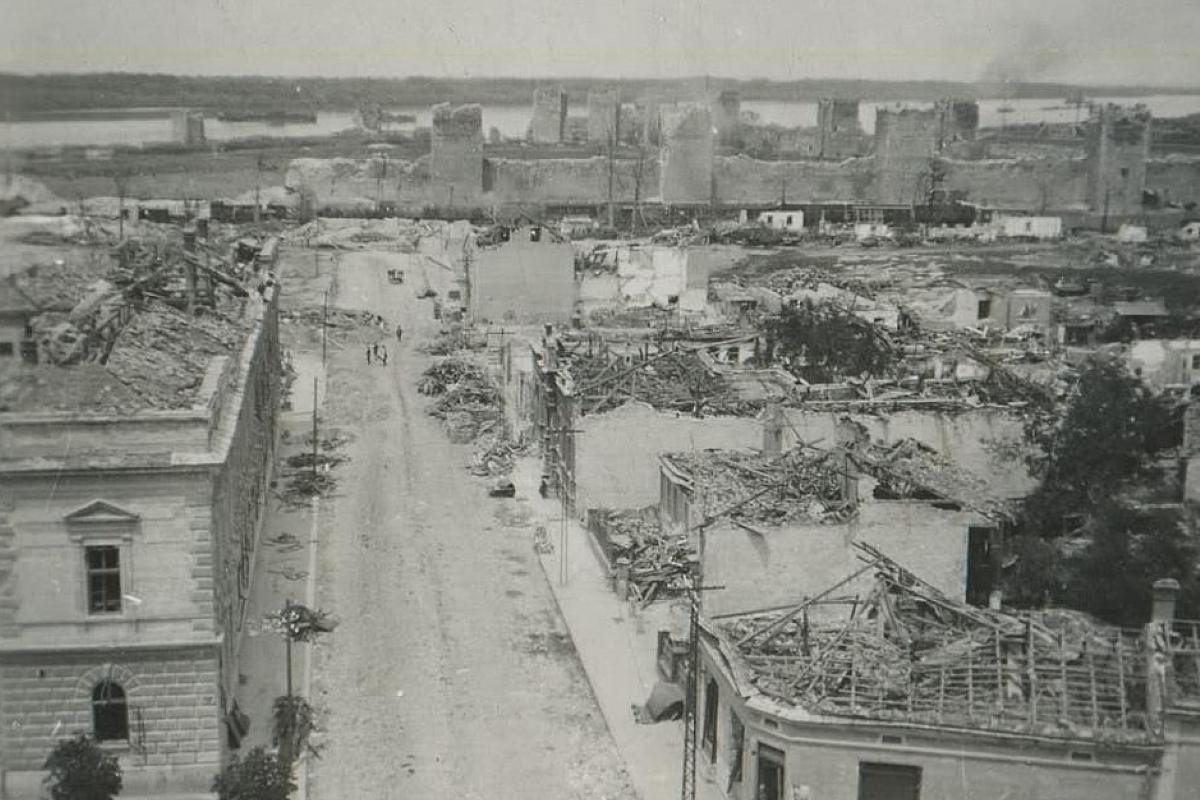
The most catastrophic devastation that Smederevo experienced in its turbulent past, was the one on the 5th June 1941, when German ammunition located in the Fortress exploded. Over 4000 innocent people were killed on that occasion and the City was utterly destroyed.
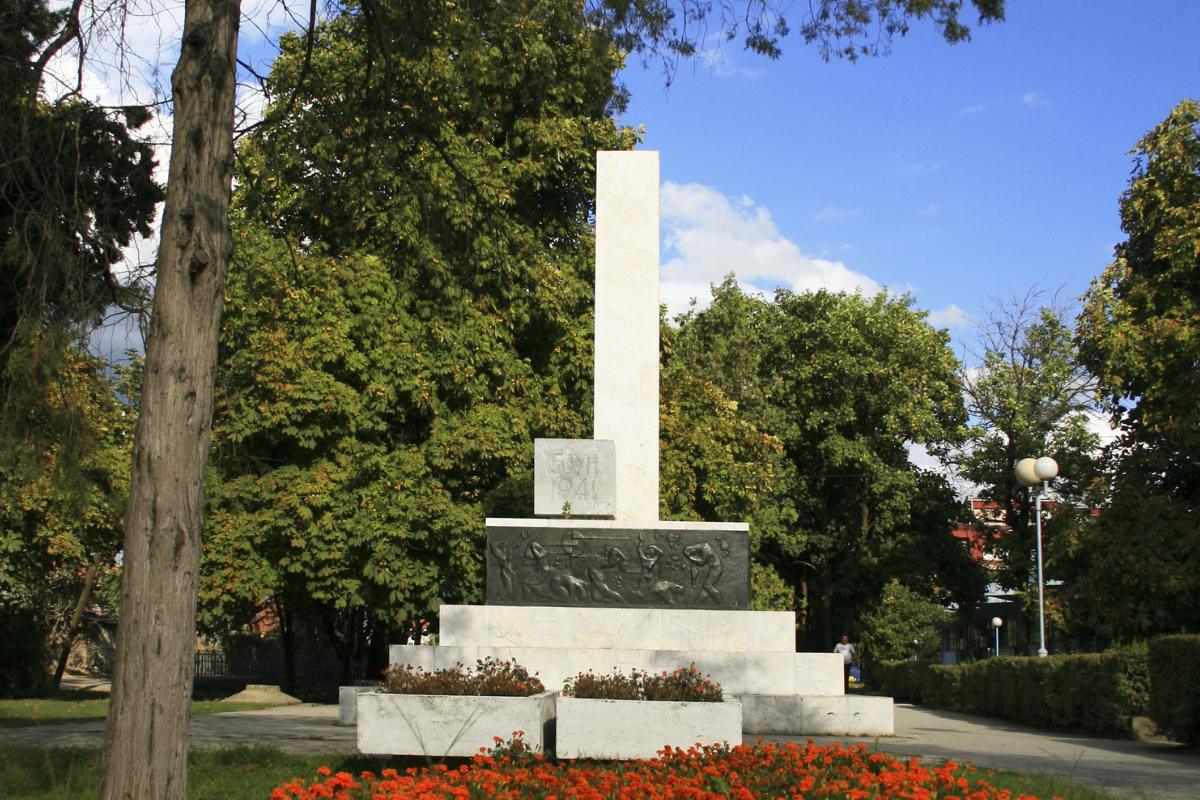
In 1973, the Monument to the victims of the 5th June tragedy, the work of an academic sculptor from Smederevo, Selimir Jovanović, was uncovered. The Monument is shaped as a stepped pyramid with an obelisk, a birth symbol, and a sarcophagus, a death symbol. The bronze relief shows the rescue of the wounded after the explosion, mourning and burying the dead, whereas the last, fourth plaque shows the City recovery.
Karađorđev dud
(Karađorđe’s Mulberry Tree)
Karađorđev dud (Karađorđe’s Mulberry Tree) stands in the City center in the vicinity of Gymnasium. It is an important natural monument of botanical character, and is probably the oldest white mulberry tree in the Balkans. Karađorđev dud has a great historical value – it is a living witness of many historical events that have taken place in Smederevo in the last 300 years.
Under its crown, Vožd Karađorđe, the leader of the First Serbian Uprising received the keys of Smederevo Fortress from Turkish Commander Dizdar Muharem Guša in November 1805, which symbolized the liberation of Smederevo from the Turkish rule.
The Turks left many cannons and ammunition to the Serbs on that occasion, and Karađorđe allowed them to leave Smederevo with military honours and small weapons and to sail boats down the Danube to Bulgaria.
