
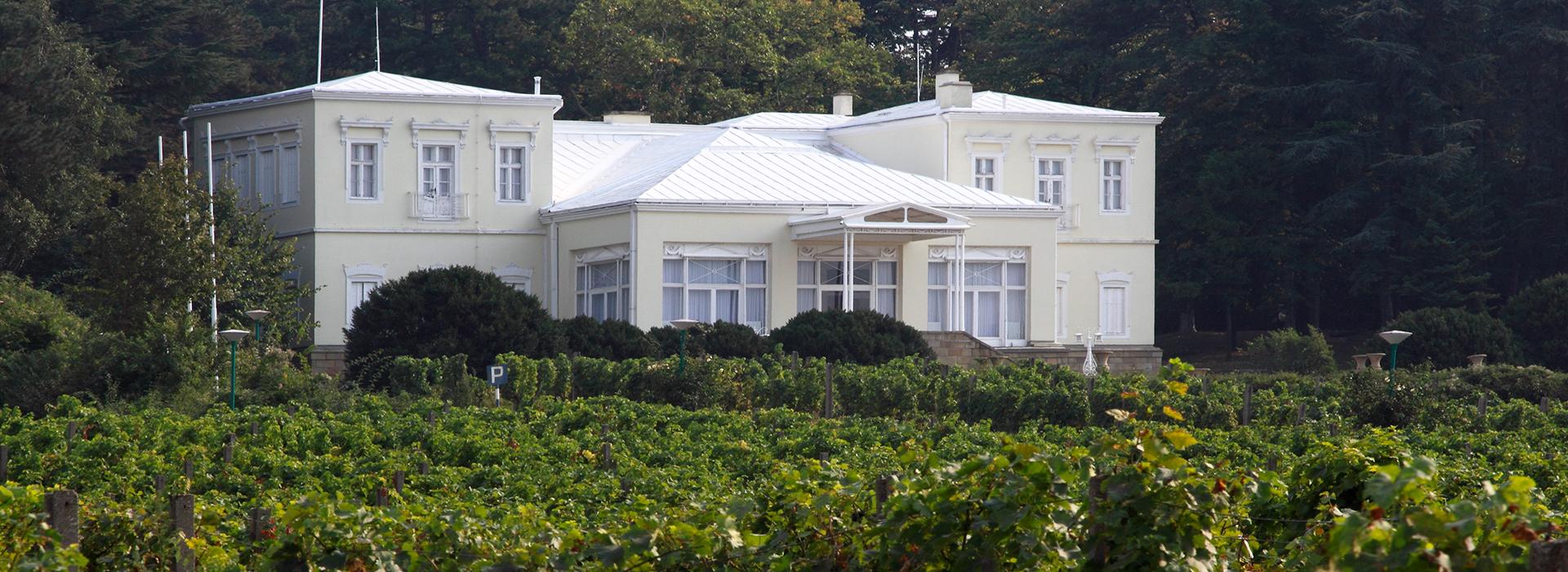
THE VILLA ‘ZLATNI BREG’ (GOLDEN HILL)
The Villa ‘Zlatni breg’ has a special place in the cultural and historical heritage of Smederevo, as a once summer house of Serbian ruling dynasty Obrenović.
The history of Princely – Royal Villa goes back to the first decades of the 19th century, in time of the liberation of Serbia from the Ottoman rule and creation of the modern Serbian state.
The Prince Miloš Obrenović, the founder of the ruling dynasty, formed a special property of 30 hectares by purchasing the land from the Turkish Spahijas, with the wish to construct here a palace for his family and to cultivate vineyards. t was in this Serbian region that the Romans planted first grapevines, poetically naming this part of Smederevo Mons Aureus (Golden Hill). Medieval ruler, Despot Đurađ Branković and his noblemen, were also proud of quality wines made here and so were the Turkish landowners and beys later.
IIn 1833, Knez (Princely Ruler) Miloš built here his living quarters with wine cellars the white wines of which soon became renown on the European market.
During his long rule, Knez (Princely Ruler) Mihailo Obrenović, the son of Knez Miloš and his wife Kneginja Ljubica, renewed the grape vines on his father’s property where he built a two-floor summer house in 1865. It was in this period that grape harvest in the Knez’s vineyard became public feast for the first time. The grapes from the Knez’s and later from the King’s vineyard would become a role model for local grape growers. In the late 19th century, this gave birth to the idea about Grape Exhibitions which has extended through decades and acquired its present form as a tourist and economic manifestation ’Smederevska jesen’ (Smederevo Autumn).
The real Court life was established in the Villa Obrenović during the reign of King Milan and Queen Natalija Obrenović, and flourished again during the reign of their son Aleksandar. Queen Natalija deserves credit for the reconstruction of Knez Mihailo’s summer house into a representative structure of the Villa in 1897, which was soon to become one of the most important meeting place of Serbian cultural elite – luxurious entertainments were organized and well established names of Serbian literature and art gathered here.
From 1900 to 1903, the Villa in Smederevo was the King’s summer Court, where ruling couple would often hide from the eyes of curious public. After the May Coup in 1903 and the regicide of King Aleksandar and Draga, Queen Natalija, as a sole successor of the Obrenović’s property, bestowed the summer house to the Colonel Antonije Orešković because of his loyalty to the Dynasty. The summer house was Orešković’s property until 1945, when it became state property.
While the Villa Obrenović was transformed into German hospital during the World War I, after the World War II became the state property, and as such it was first used as the Executive Council Villa and then as a residential building of the Government of the Republic of Serbia. In the post-war period, the Villa was named Zlatni breg (Golden Hill) which is still in use.
For almost seventy years the Villa was the ‘Forbidden City’ of Smederevo, hiding inside of it the meetings of statesmen, important agreements of politicians and secret police as well as many intrigues. Only in 2009 was the Villa Zlatni breg granted a status of cultural monument of special importance, and in 2014 it finally became available to all the visitors who now have the opportunity to experience the spirit of the old royal times in its chambers and parks.
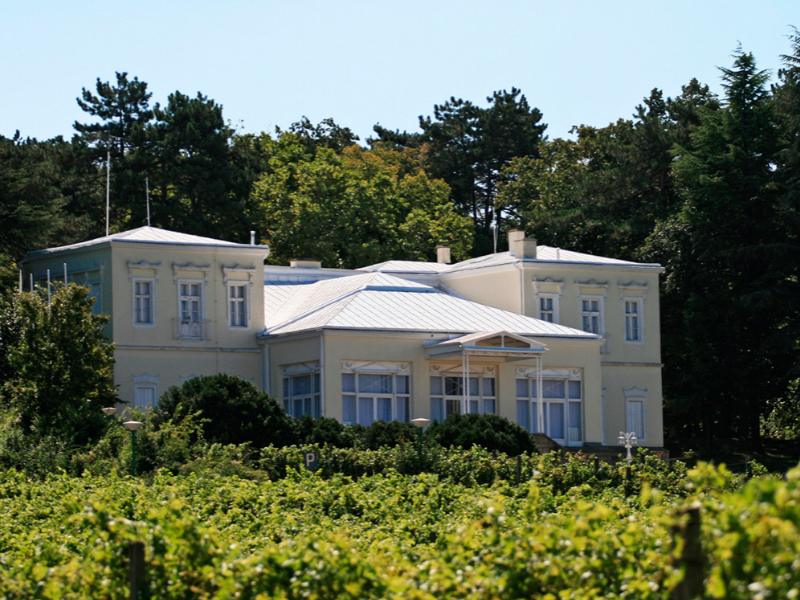
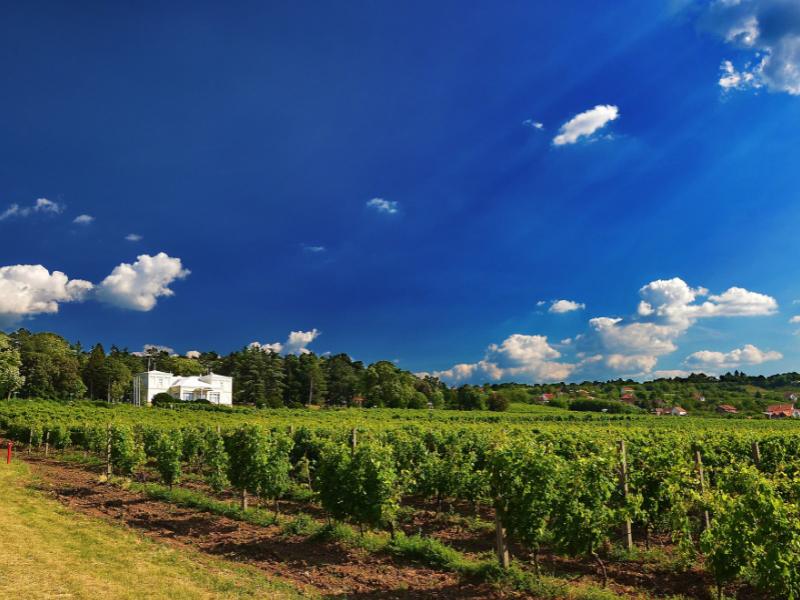
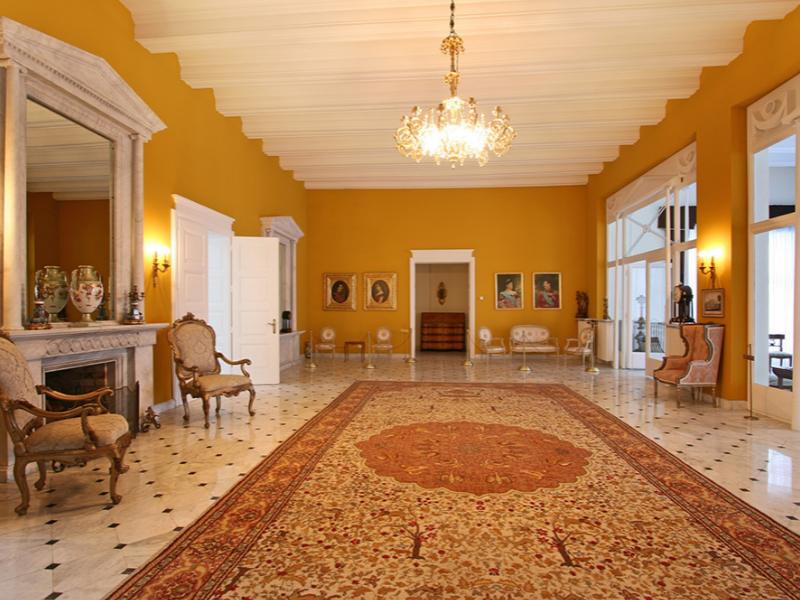
The programme includes:
organised transport, a tour guide, tickets for the fortress and villa
Duration:
three hours
Starting point:
Tourist-information centre in Smederevo Fortress (entrance to the Small Town)
Language:
Serbian and English
Options:
• Lunch at a restaurant.
• Visit to the local winery with wine tasting and buffet.